

How to Keep Fact-Check Rules in an SEO Content Brief
Answer: Put accuracy requirements in four separate sections—search intent, source conditions, claim rules, and publishing conditions. Write each rule as an action with a boundary, then preview the complete brief in delivery order before sending it. This makes missing, conflicting, or outdated instructions easier to identify; it is an editorial workflow, not a ranking guarantee.
Why SEO Briefs Lose Accuracy Requirements
A brief may clearly show the target query, intent, headings, internal links, tone, and CTA while treating accuracy as a final reminder. “Use reliable information” sounds sensible, but it does not tell a writer which statements require evidence or what to do when evidence is incomplete.
The standards may already exist, but they are often scattered across prior briefs, messages, notes, and memory. Reassembling them for every assignment creates another opportunity to omit a condition. The practical goal is not a longer brief. It is a structure in which a missing rule is visible.
Before and After: Replace a Vague Instruction
Before
Fact-check the article and use credible sources.
After
Identify every material claim that depends on an external fact. Attach an appropriate source before publication. Preserve qualifications when the evidence is uncertain or limited. Remove claims the cited source does not support. Hold publication when a required source or approval is missing.
The revised version separates actions from release conditions. It also preserves meaningful uncertainty instead of asking the writer to make every statement sound conclusive.
The Four-Layer SEO Brief System
1. Define Search Intent
State the reader’s question, what the reader likely knows, and the useful outcome. Search intent guides the assignment, but it should not override source or claim requirements.
Suggested fields:
- Primary reader question
- Awareness stage
- Useful outcome
- Scope exclusions
2. Set Source Conditions
Name the claims that require evidence and the source types acceptable for this assignment. Add an as-of date when facts can change. Avoid hiding these conditions inside a general style note.
Suggested fields:
- Claims or sections requiring sources
- Acceptable source types
- Required source date or freshness condition
- Citation or link placement
3. Write Claim Rules
Explain how the draft should handle numbers, comparisons, changing information, uncertainty, and unsupported statements. Match the strength of the language to what the source establishes.
Suggested rules:
- Source material factual claims.
- Qualify uncertain or conditional findings.
- Date facts that may change.
- Remove or return unsupported claims.
- Do not turn an editorial hypothesis into an official recommendation.
4. Define Publishing Conditions
Finish with release gates. A draft should remain on hold when required evidence or approval is missing, links do not point to the intended sources, or material conflicts remain unresolved. These are editorial gates; PF does not inspect live eligibility or publish for you.
Audit the Combined Brief Before Sending
Reusable blocks still need to work as one instruction set. Read the combined brief in the same order the writer will receive it and ask:
- Does the reader question match the requested article?
- Are source requirements explicit rather than implied?
- Does each claim rule describe an action?
- Are publishing conditions placed after drafting instructions?
- Do any two conditions conflict?
- Is an outdated instruction still selected?
If a rule says only “be accurate,” replace it with the action required and the consequence of missing support.
Turn the Brief Into a Reusable Workflow
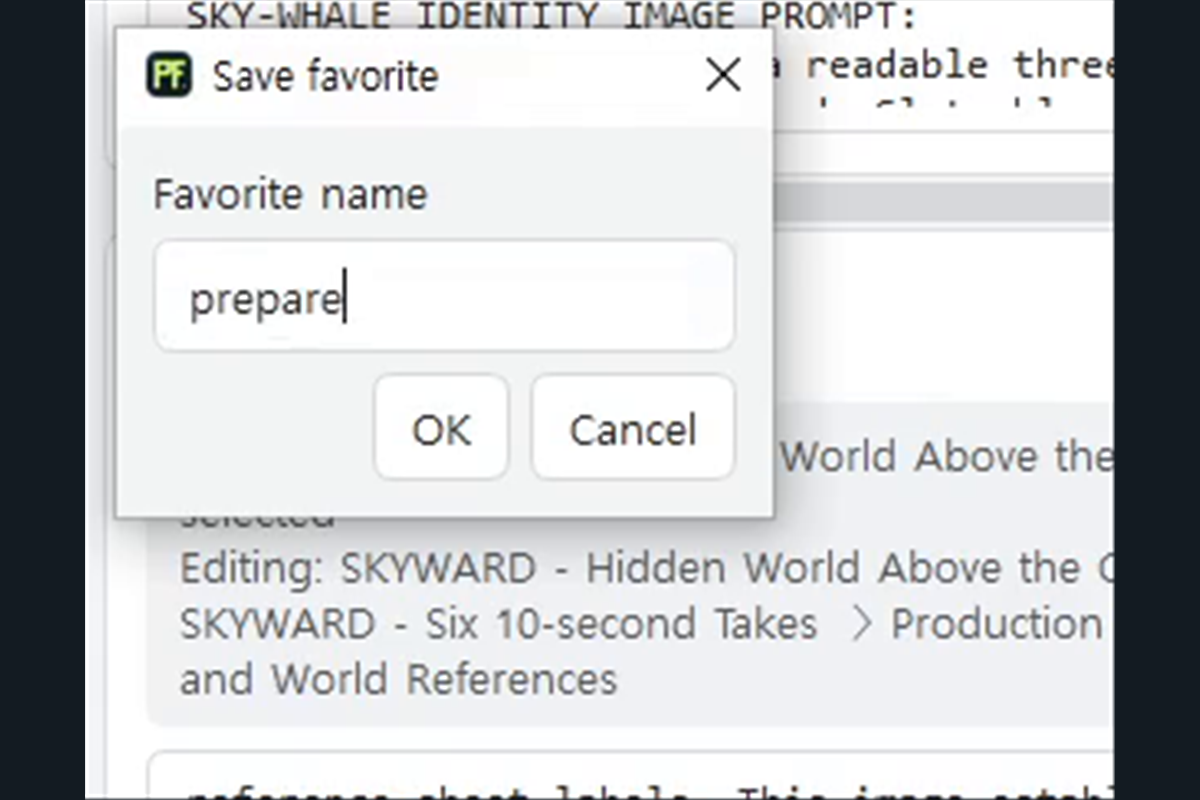
Keep stable conditions in reusable blocks and leave topic-specific fields easy to replace. Use a descriptive workflow name, such as “SEO Article — Sourced Claims” or “Comparison Post — Verification Required.”
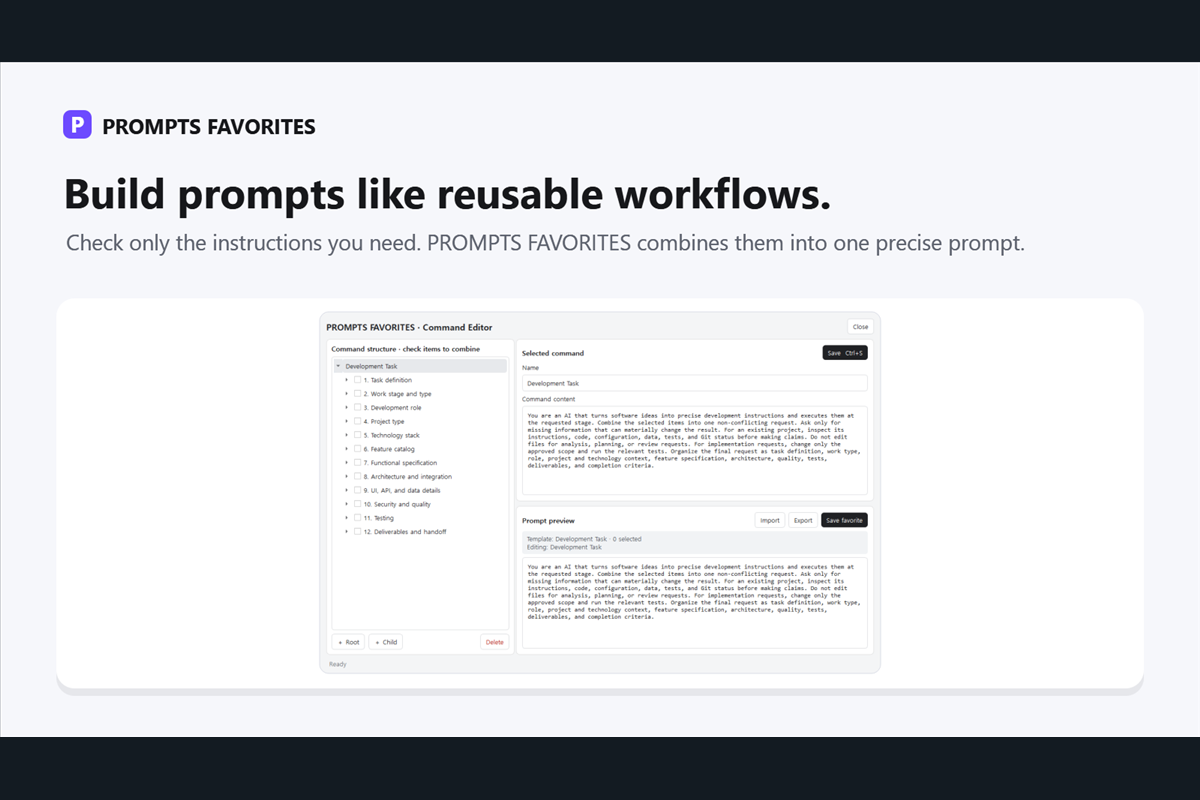
PF is a Windows tool for selecting and combining hierarchical instruction blocks, previewing the combined result, saving named workflows locally in JSON, reusing them, and sending instructions to a selected Windows target. It does not fact-check, write the resulting content, determine recommendation eligibility, or publish.
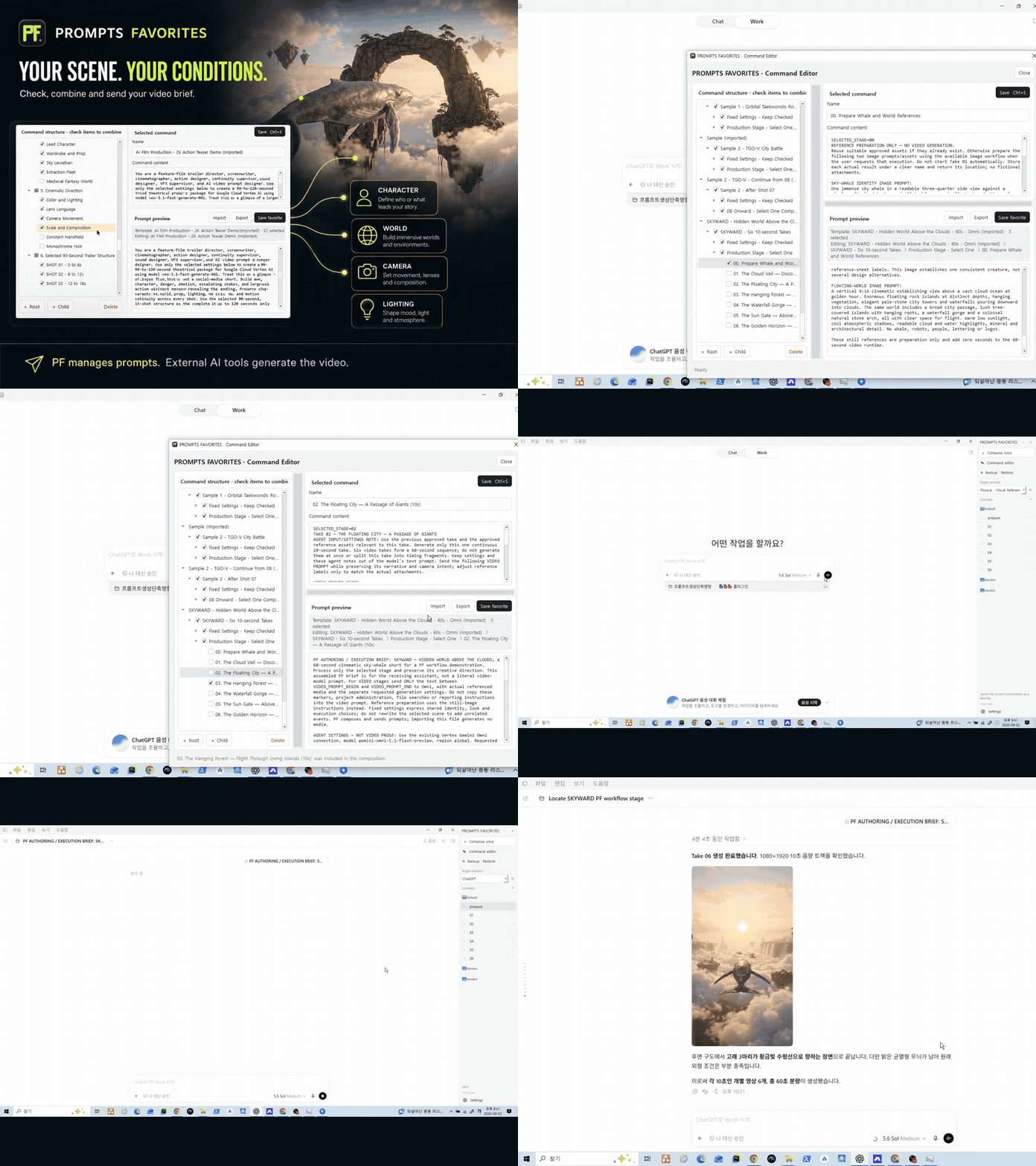
Keep Every Fact-Check Rule Ready for the Next Brief
Organize source, claim, and publishing conditions as reusable instruction blocks, then inspect the combined brief before you send it.